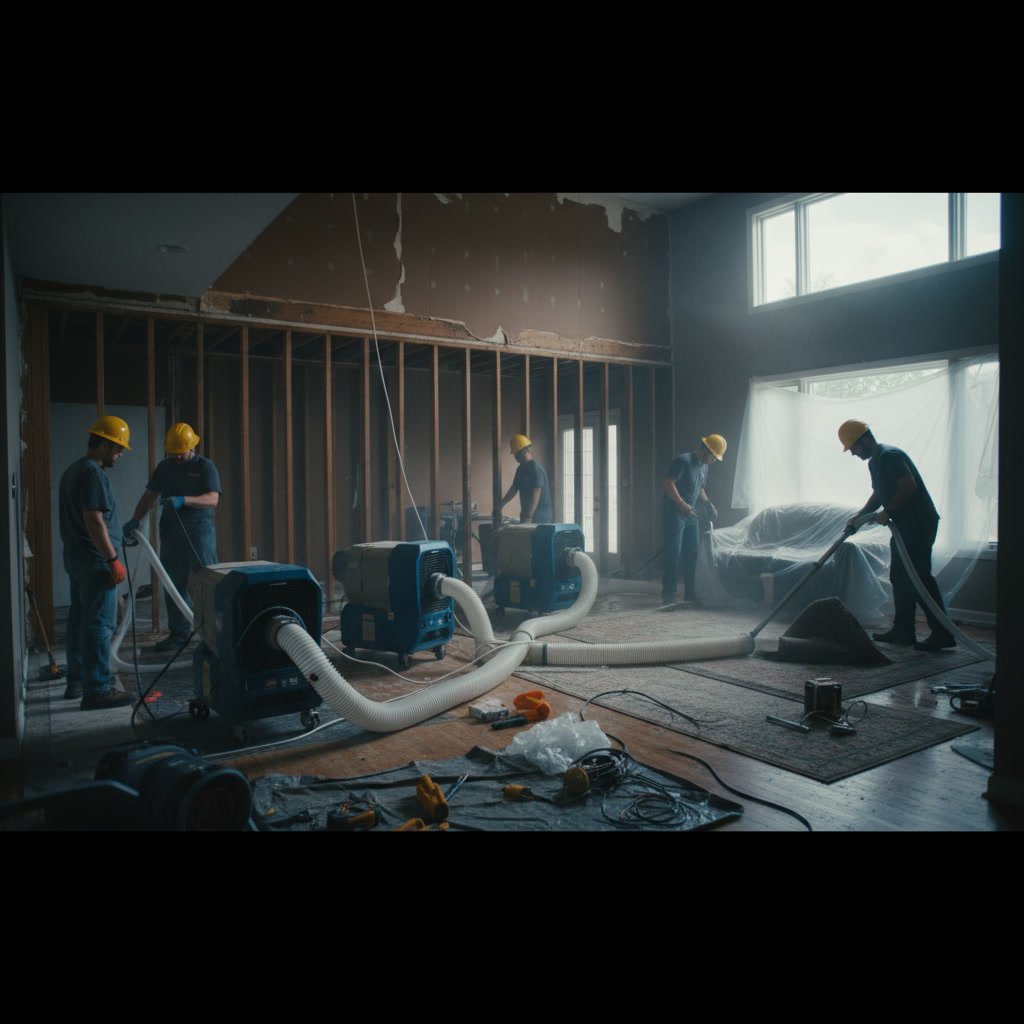
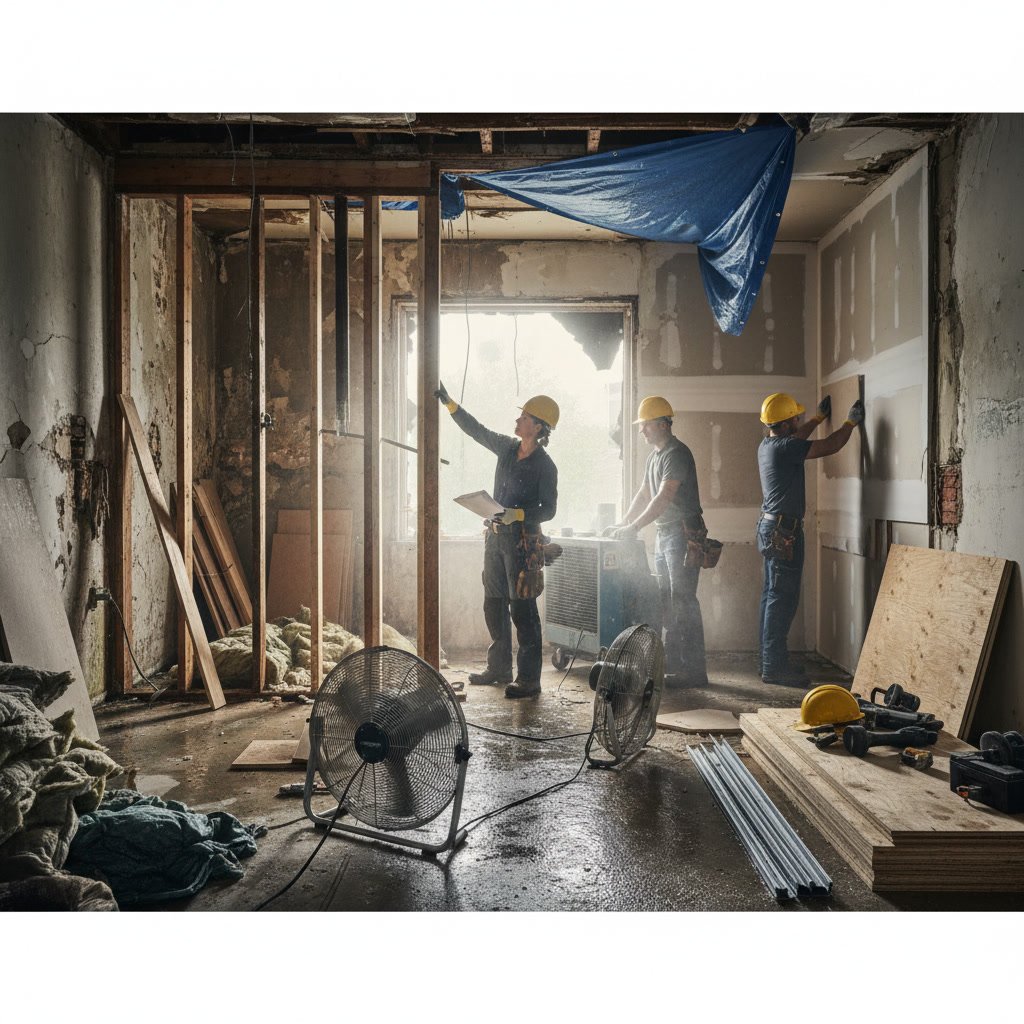
After severe property damage from fire, flooding, or major storms, standard cleaning and repairs may not be enough. When structural elements like load-bearing walls, floor joists, or roof systems sustain significant damage, restoration reconstruction becomes necessary to restore both safety and function. This level of work involves rebuilding damaged structures, not just patching surfaces, and the warning signs often appear within hours or days of the initial event.
Understanding the Difference Between Repair and Reconstruction
Most property damage starts with emergency mitigation and basic repairs. You call professionals to remove standing water, dry the structure, or clean smoke residue. These services address immediate threats and prevent further deterioration.
Reconstruction enters the picture when damage penetrates beyond surfaces into the building’s framework. This means replacing entire sections of walls, rebuilding floor systems, reconstructing roof structures, or gutting and rebuilding rooms down to the studs. The work requires licensed contractors, structural engineers in some cases, and permits from local building authorities.
Property owners often face this decision after major incidents. A kitchen fire that spread into wall cavities, a burst pipe that flooded multiple floors for hours, or storm damage that compromised the roof deck all create scenarios where simple fixes won’t restore the building to code or safe occupancy standards.
Visible Structural Deformation and Movement
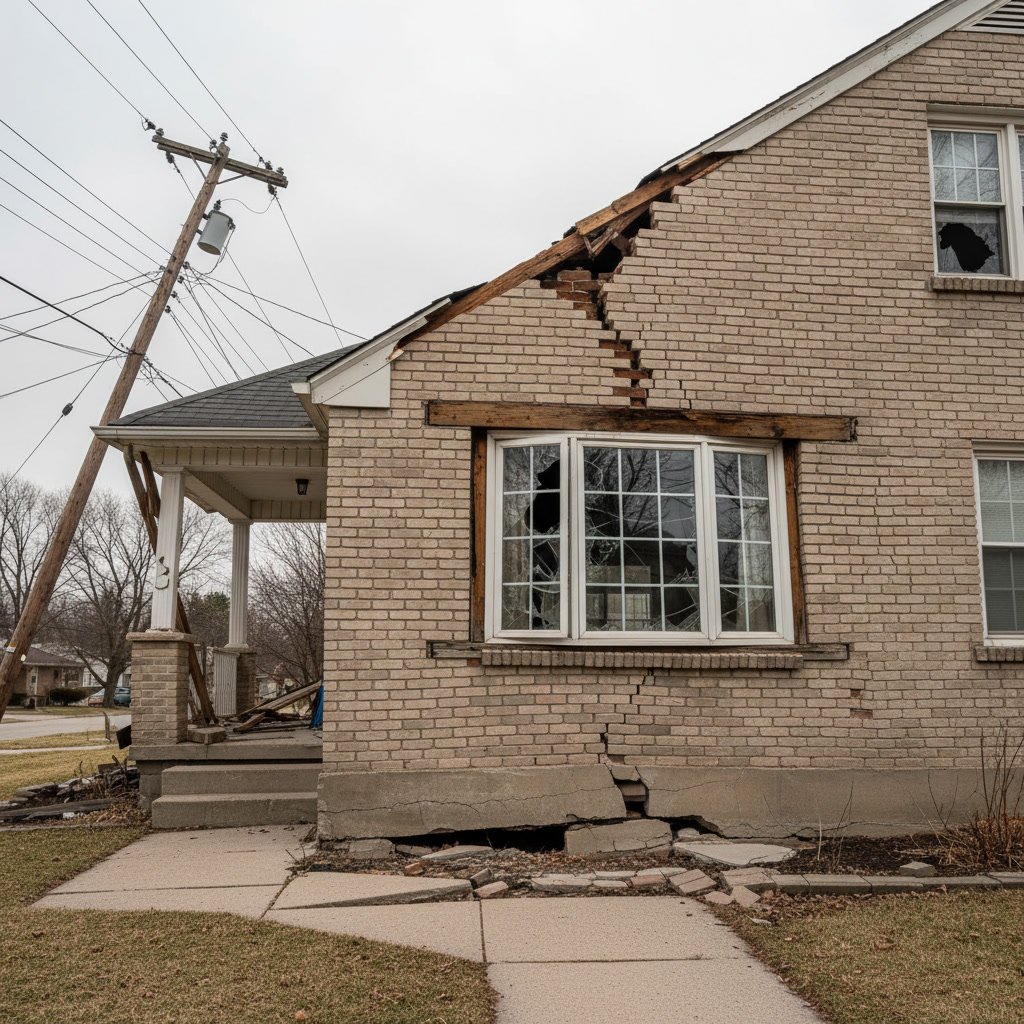
One of the clearest indicators appears when walls, floors, or ceilings no longer sit level or plumb. Water-soaked floor joists sag visibly in the center of rooms. Walls lean or bow outward after fire weakens the framing. Ceiling drywall pulls away from rafters, creating gaps along the perimeter.
These changes signal that structural members lost their load-bearing capacity. Wood absorbs moisture and loses strength. Fire damages dimensional lumber, reducing its ability to support weight. Storm winds can shift entire wall sections off their foundations.
When you notice doors that suddenly won’t close, windows that jam in their frames, or cracks that widen daily, the building is moving. Movement means instability, and instability requires rebuilding the affected components to engineering standards.
Compromised Load-Bearing Elements in Philadelphia Properties
Older homes and commercial buildings throughout Philadelphia often feature balloon framing, brick bearing walls, or timber post-and-beam construction. These systems respond differently to damage than modern platform framing.
Water damage that travels vertically through balloon-framed walls can weaken studs across multiple floors simultaneously. Fire in brick-bearing structures can cause mortar to crumble and lintels to fail. When key structural components show signs of failure, partial demolition and rebuilding become the only safe option.
Professional structural assessment identifies which elements must be replaced. Sometimes a single damaged beam supports loads for an entire section of building. Replacing that beam requires temporary shoring, careful demolition, and precise installation of code-compliant members.
Extensive Water Penetration Beyond Surface Materials
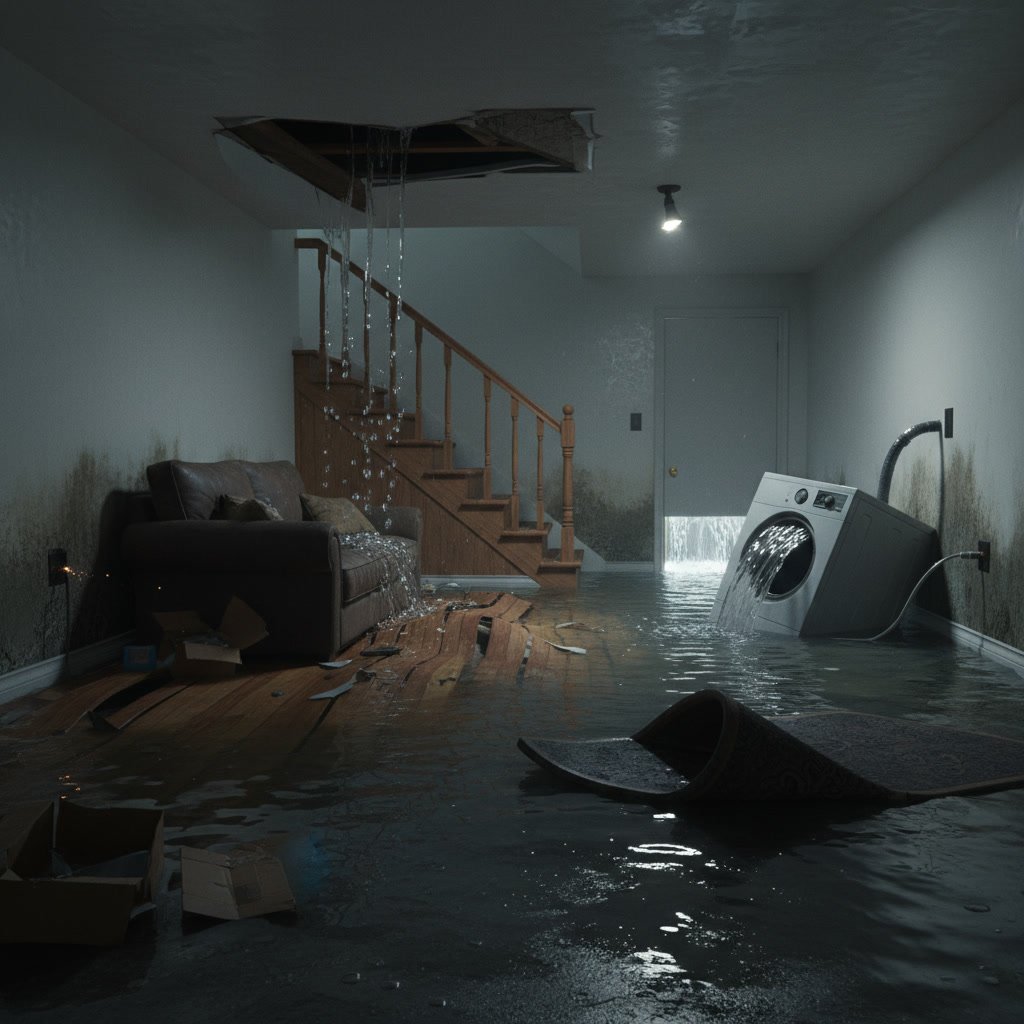
Surface water damage affects drywall, flooring, and baseboards. Deep water penetration affects subfloors, wall cavities, insulation, and framing lumber. The difference determines whether you need water damage restoration alone or full reconstruction.
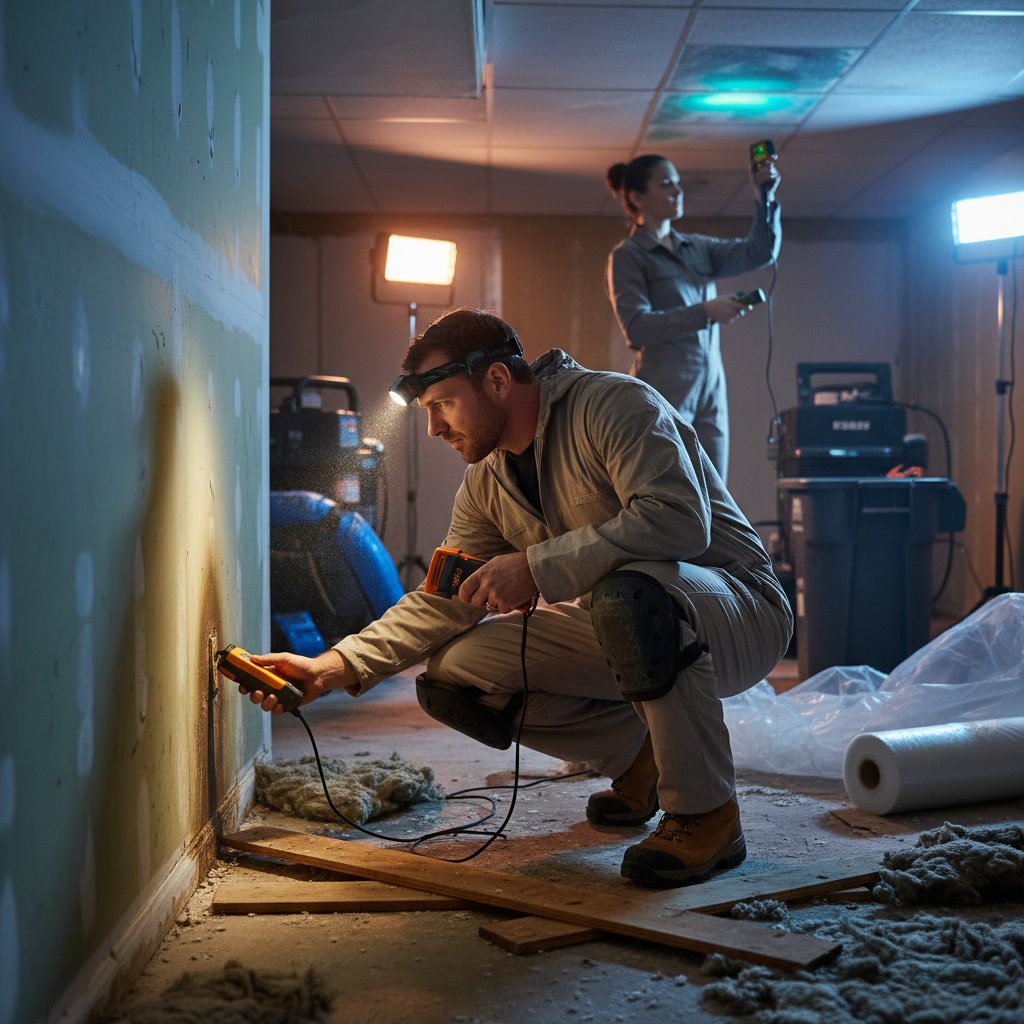
Signs of deep penetration include persistent musty odors even after drying, discoloration that spreads rather than recedes, and flooring that feels spongy underfoot days after extraction. Moisture meters reading above 20% in framing lumber weeks after the event indicate saturation that demands removal and replacement.
Subfloor damage presents a particular challenge. Particle board and oriented strand board degrade rapidly when saturated, losing structural integrity permanently. Even after drying, these materials remain weak and prone to mold growth. Reconstruction requires removing damaged subflooring, inspecting and treating joists, and installing new code-compliant materials.
Fire Damage That Penetrated Structural Cavities
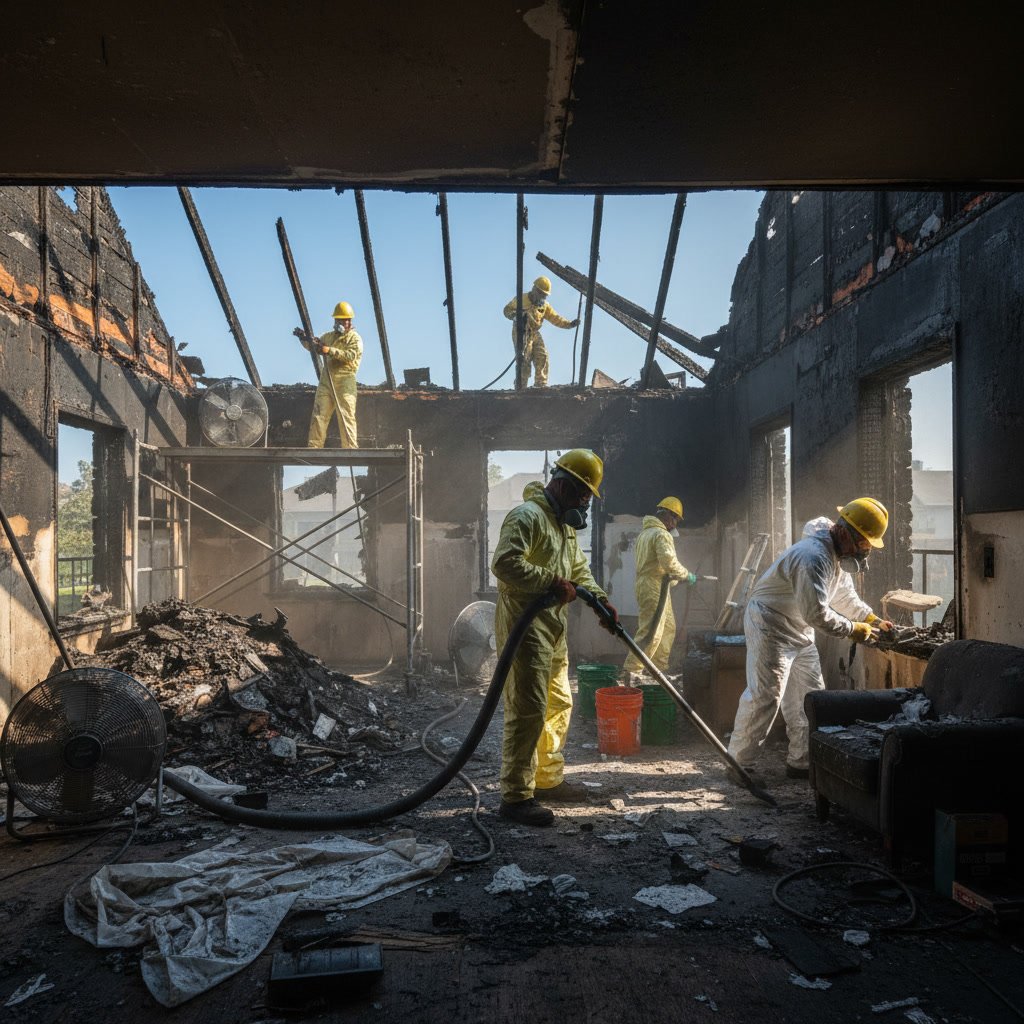
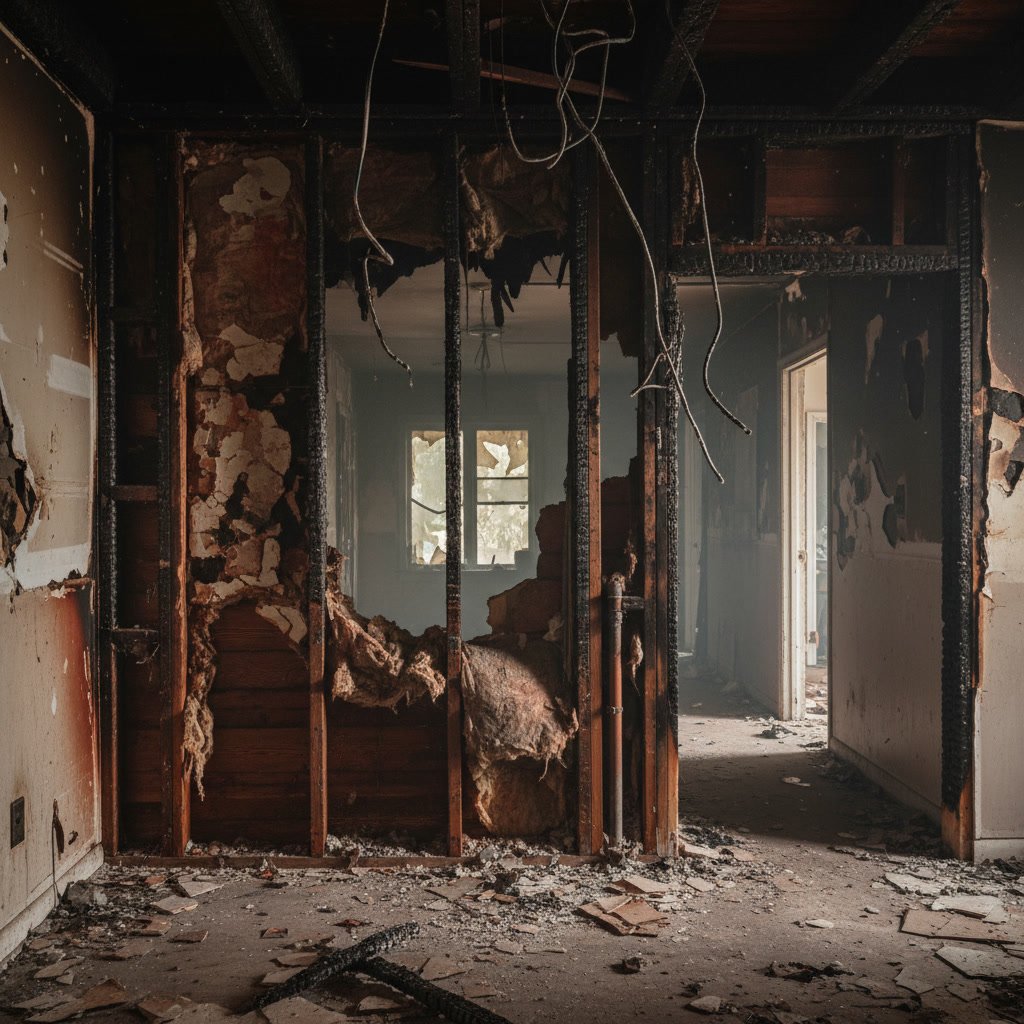
Visible fire and smoke damage on walls and ceilings often extends invisibly into wall cavities, attic spaces, and floor assemblies. Heat travels through materials, weakening lumber that shows no surface char. Smoke penetrates insulation, electrical systems, and HVAC components hidden behind finishes.
When fire damage restoration professionals remove wall coverings, they frequently discover charred studs, melted wiring, and compromised insulation. These hidden conditions require selective demolition to determine the full extent of damage.
Fire also affects fasteners and connections. Nails lose holding power, metal hangers weaken, and adhesives fail. Rebuilding these assemblies ensures connections meet current building codes for wind resistance, seismic performance, and load transfer.
Multiple Systems Requiring Simultaneous Replacement
Certain damage scenarios affect electrical, plumbing, HVAC, and structural systems all at once. Sewage backups contaminate insulation and wiring. Roof leaks damage ceiling joists while simultaneously ruining electrical fixtures and soaking insulation. Major floods compromise everything from foundation walls to mechanical equipment.
When damage crosses multiple trades, reconstruction becomes more efficient than sequential repairs. Opening walls once to address framing, wiring, plumbing, and insulation costs less and causes less disruption than five separate repair visits.
This approach also ensures compatibility. New electrical systems installed in old wall cavities may not meet current code for fire blocking. New plumbing in damaged floor systems requires proper support and protection. Coordinated reconstruction addresses all requirements in a single, integrated project.
Mold Growth Indicating Long-Term Moisture Problems
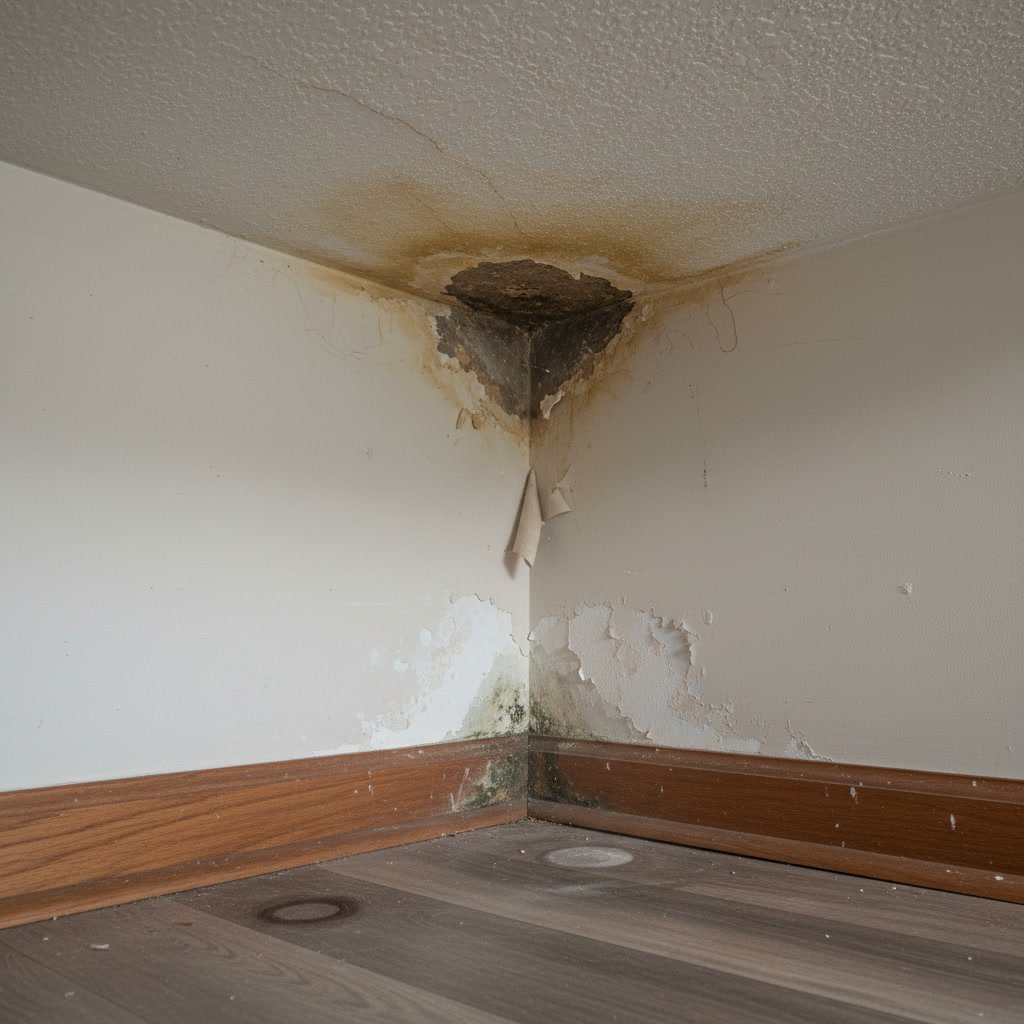
Surface mold on drywall or tile can often be cleaned and treated. Mold growth on framing lumber, inside wall cavities, or throughout insulation indicates moisture that persisted long enough for spores to colonize porous materials.
When mold remediation requires removing significant building materials, reconstruction naturally follows. The process involves establishing containment, removing contaminated materials, treating remaining surfaces, and rebuilding with mold-resistant products where appropriate.
Proper reconstruction after mold includes identifying and correcting the moisture source. Simply rebuilding over a chronic leak or condensation problem ensures the mold will return. Experienced restoration professionals connect the dots between visible damage and underlying building defects.
Code Compliance Requirements Triggering Upgrades
Building codes evolve continuously. When reconstruction involves more than 50% of a building component, many jurisdictions require bringing that entire component to current code standards. A partial roof replacement may trigger requirements for additional ventilation, upgraded sheathing, or improved flashing details.
Similarly, electrical work in damaged areas often requires GFCI protection, arc-fault breakers, or updated panel capacity. Plumbing repairs may necessitate backflow prevention or water hammer arrestors. Structural repairs sometimes demand hurricane straps, seismic anchors, or improved foundation connections.
These requirements add scope and cost but increase safety and property value. A reconstruction project managed by certified professionals ensures all work meets or exceeds applicable codes, protecting you during inspections and future property transactions.
Insurance Adjuster Recommendations and Documentation
Insurance adjusters assess damage severity and determine coverage. When adjusters document extensive structural damage, contamination, or code-upgrade requirements, their reports often support reconstruction rather than basic repairs.
Professional restoration companies work directly with insurance carriers to document conditions, provide detailed estimates, and justify scope decisions. This collaboration protects property owners from unexpected costs and ensures claims reflect the true extent of necessary work.
Detailed photo documentation, moisture mapping, and thermal imaging provide objective evidence of hidden damage. These records support reconstruction decisions when surface conditions alone don’t tell the complete story. Understanding the full restoration process from start to finish helps property owners communicate effectively with adjusters and contractors.
Timeline Pressures and Occupancy Requirements
Some properties cannot remain vacant for extended periods. Commercial buildings lose revenue daily. Rental properties face lease obligations. Homeowners need housing quickly, especially after storm damage restoration affects entire neighborhoods simultaneously.
Reconstruction, while more extensive than repairs, often proceeds faster overall. Rather than waiting for materials to dry completely, assessing hidden damage, making repairs, discovering additional problems, and repeating the cycle, reconstruction removes damaged materials immediately and rebuilds in a linear progression.
Experienced contractors coordinate trades efficiently, minimizing downtime. Drywall installers follow immediately after electricians and plumbers. Painters and floor installers work in completed sections while framing continues elsewhere. This orchestration reduces total project duration compared to stop-start repair approaches.
Making the Decision With Professional Guidance
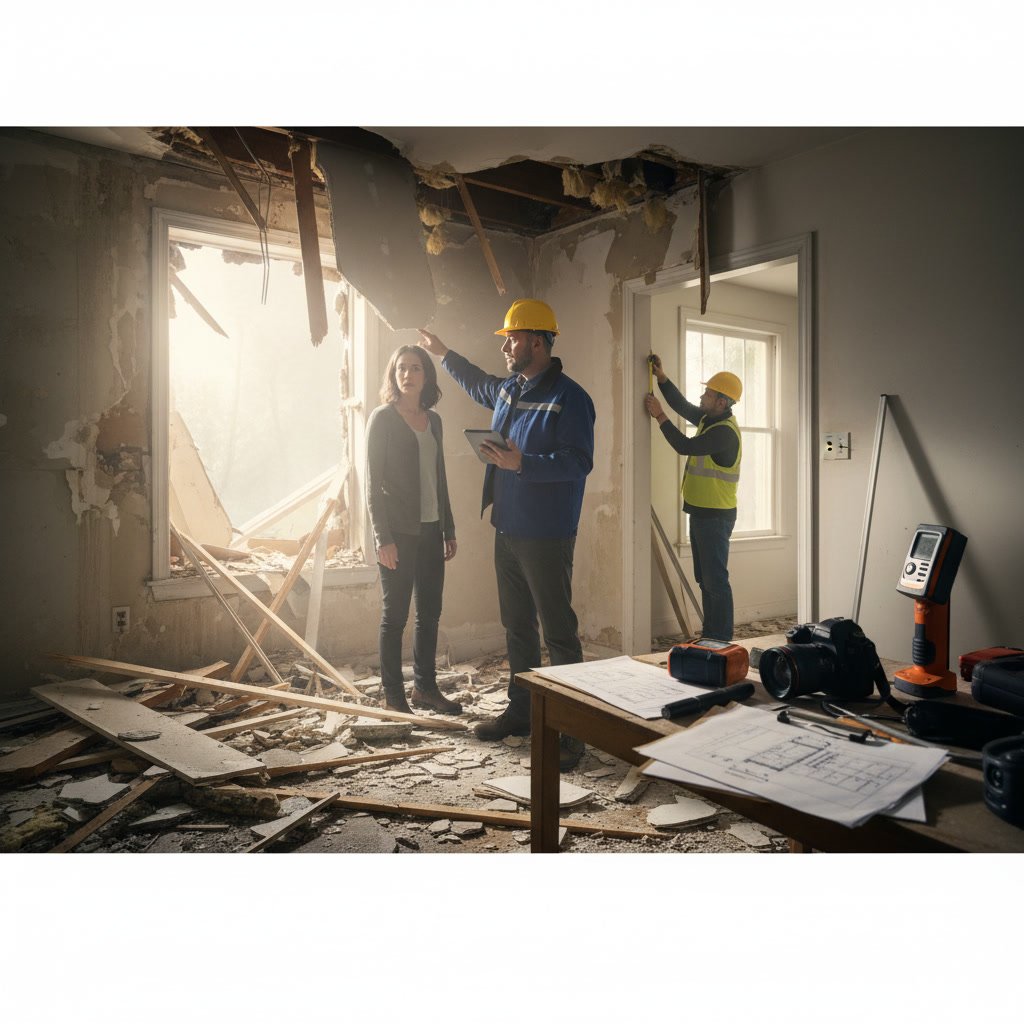
Property damage creates stress and uncertainty. Distinguishing between repairable damage and conditions requiring reconstruction demands expertise most property owners don’t possess. Professional assessment within 24 to 48 hours of the initial event provides clarity and direction.
Certified restoration specialists evaluate structural integrity, moisture penetration, contamination levels, and code implications. They provide written scopes of work, detailed estimates, and project timelines. This information allows informed decisions about repair versus reconstruction.
The assessment also reveals hidden opportunities. Reconstruction projects allow layout improvements, system upgrades, and efficiency enhancements that simple repairs cannot accommodate. Converting a loss into an improvement requires planning, but the results often exceed pre-damage conditions in function, safety, and value.
Protecting Your Property and Investment
Severe property damage demands immediate attention and expert evaluation. Structural deformation, deep moisture penetration, compromised load-bearing elements, extensive fire damage, multi-system failures, significant mold growth, code compliance triggers, and occupancy pressures all signal the need for comprehensive reconstruction rather than surface repairs.
Professional restoration specialists provide the expertise needed to assess damage accurately, document conditions thoroughly, and execute reconstruction projects that restore safety, function, and value to damaged properties.
React Restoration LLC provides comprehensive damage assessment and reconstruction services throughout the greater Philadelphia region. Our certified team responds 24/7 to evaluate your property, work directly with your insurance carrier, and execute reconstruction projects that meet all code requirements and your timeline needs. Call +16108583469 anytime for immediate assistance and expert guidance through every phase of your restoration project.