Thermal imaging leak detection uses infrared cameras to reveal temperature variations caused by hidden moisture, allowing restoration professionals to locate active leaks and saturated building materials without cutting into walls or removing flooring. The technology detects temperature differences as small as 0.1 degrees Fahrenheit, making it possible to trace water pathways from the source to affected areas quickly and accurately. Early detection prevents structural damage, mold growth, and the costly repairs that follow undetected water intrusion.
Why Water Leaks Often Go Unnoticed Until Major Damage Occurs
Most residential and commercial plumbing systems hide behind finished surfaces. Pipes run through wall cavities, under concrete slabs, and above ceilings where visual inspection is impossible without demolition. A slow leak from a pinhole corrosion point or failed pipe joint can saturate insulation, drywall, and framing lumber for weeks before visible signs appear.
By the time you notice discolored patches, bubbling paint, or a musty odor, the damage has often spread far beyond the leak’s point of origin. Water follows the path of least resistance, traveling along joists, down inside wall cavities, and across subfloors. What starts as a minor drip can affect multiple rooms before becoming obvious.
How Infrared Technology Reveals Hidden Moisture Patterns
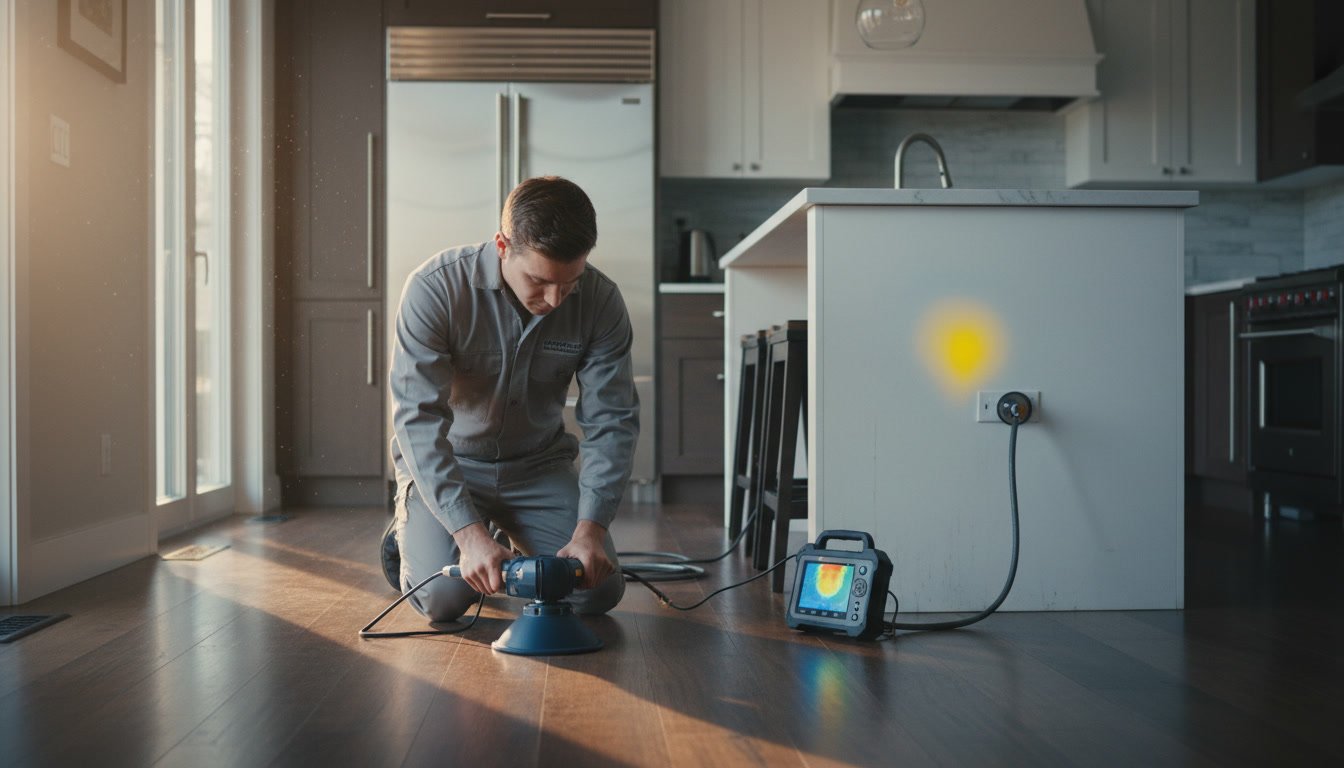
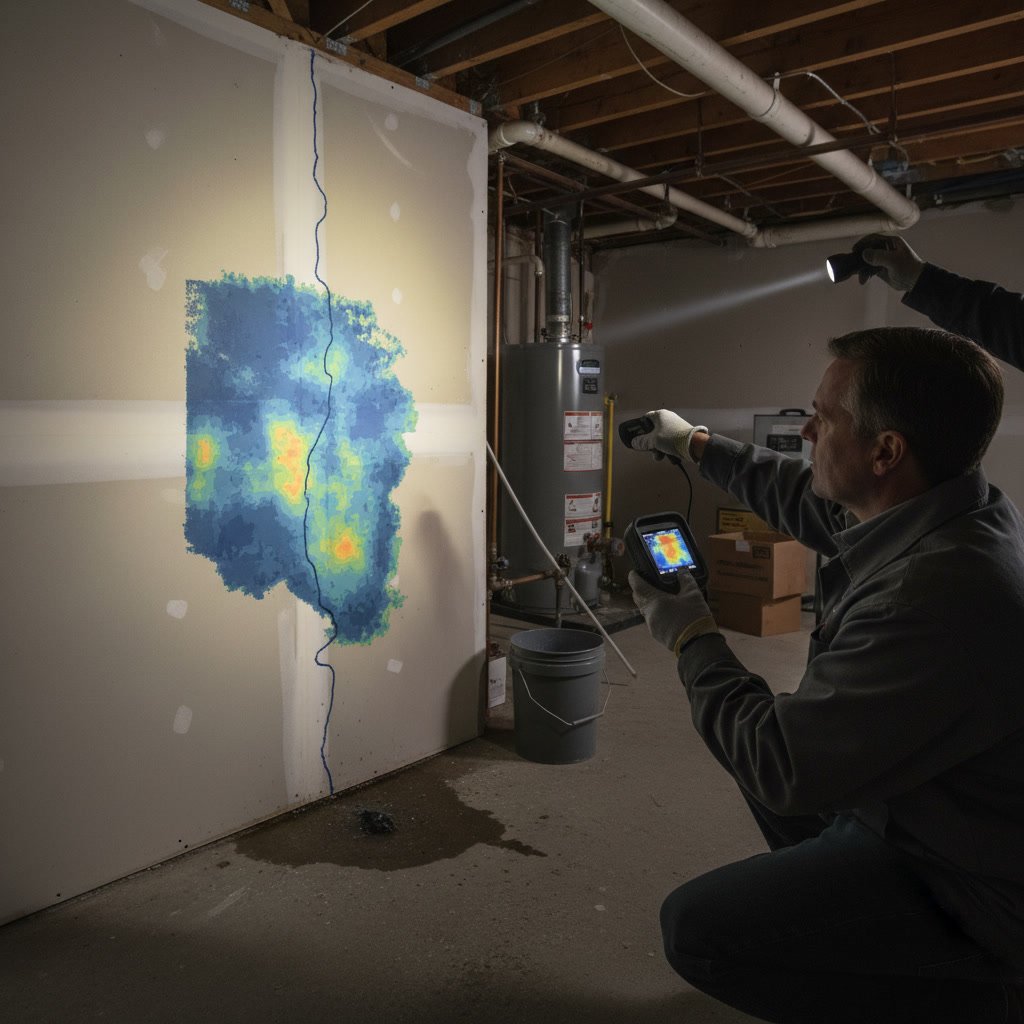
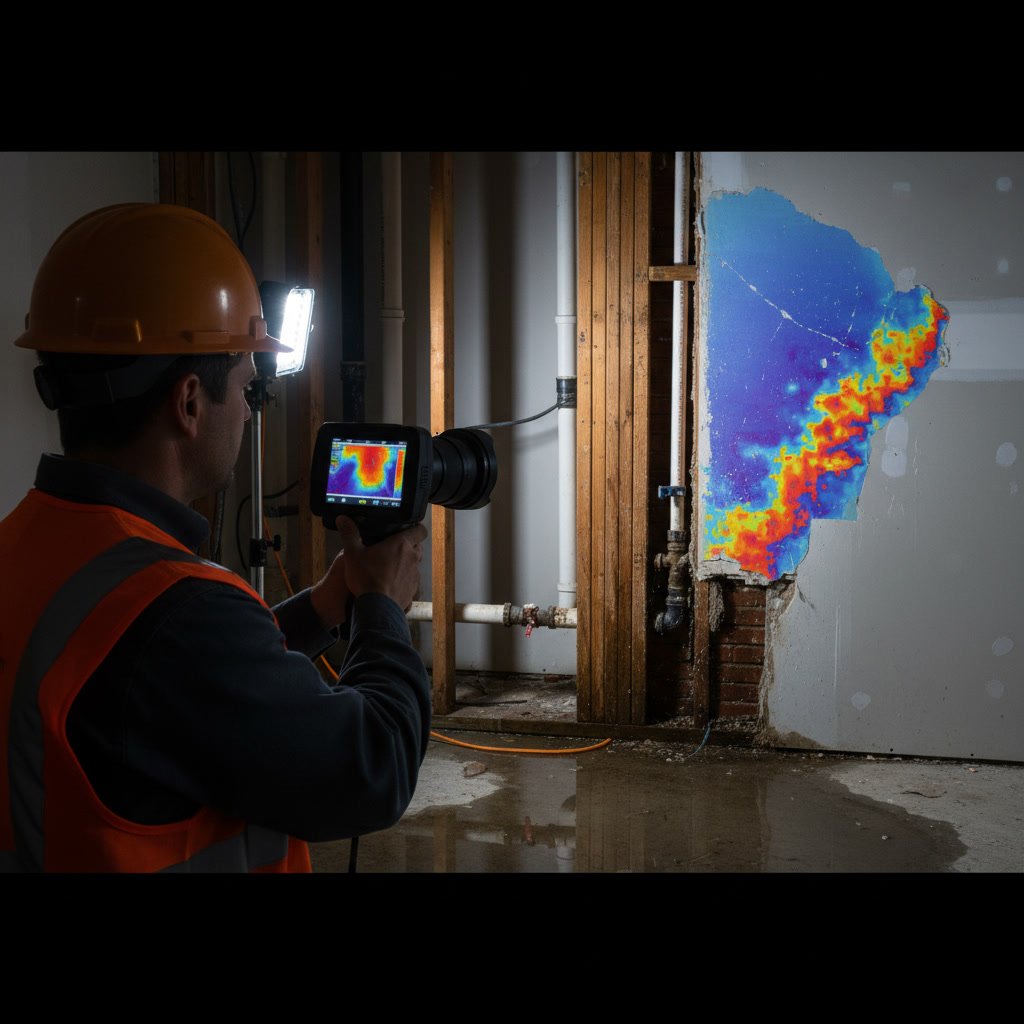
Thermal cameras translate invisible infrared radiation into visible color maps. Wet building materials hold more thermal mass than dry materials, creating temperature differences that show up clearly on a thermal image. A damp section of drywall appears cooler than the surrounding dry wall because evaporating moisture draws heat away from the surface.
Professional-grade thermal imagers display these temperature variations in real time, with color gradients showing the exact boundaries of moisture intrusion. The technology works through most common building materials, including drywall, plaster, and wood siding. It cannot see through metal or glass, but it excels at mapping moisture in walls, ceilings, and floors without destructive testing.

The Step-by-Step Process Restoration Professionals Use
A systematic thermal scan starts with understanding the plumbing layout and drainage paths in your building. Technicians identify supply lines, drain pipes, and appliance connections that could be leak sources. They then scan suspected areas methodically, looking for temperature anomalies that indicate active moisture.
The first pass covers high-risk zones: areas below bathrooms, around water heaters, near HVAC condensate lines, and beneath sinks. Once a cold spot appears on the thermal display, technicians narrow the search pattern to trace the moisture back to its source. They often combine thermal imaging with moisture meters that measure actual water content in materials, confirming what the infrared camera suggests.
After pinpointing the leak location, professionals document findings with thermal photos that show the extent of saturation. This documentation proves essential when filing insurance claims and planning remediation scope. The leak detection services process typically takes one to three hours depending on building size and complexity.
Common Leak Sources Thermal Imaging Identifies in Philadelphia Properties
Older homes throughout the region often have galvanized steel supply pipes that corrode from the inside out. Thermal scans reveal these failing pipes by showing cold spots along their entire run, not just at one leak point. Multi-family buildings frequently develop slow leaks at shower pan seals and bathtub drains, which thermal imaging detects before water migrates to units below.
Commercial properties face additional challenges with roof-mounted HVAC units and their condensate drainage. A blocked drain line can overflow inside a ceiling cavity for days before staining appears on ceiling tiles. Thermal cameras identify these wet zones immediately, allowing technicians to clear the blockage before serious damage occurs.
Slab leaks present the toughest diagnostic challenge because the pipe sits beneath several inches of concrete. Thermal imaging from above detects the temperature signature of water seeping through the slab and into flooring materials, confirming a leak without breaking concrete unnecessarily.
When Thermal Scanning Prevents Costly Structural Repairs
The difference between catching a leak in week one versus week six determines whether you need simple pipe repair or full restoration reconstruction. Early detection limits damage to the immediate leak area. Delayed discovery allows water to rot floor joists, dissolve drywall paper backing, and compromise wall studs that then require replacement.
One expert-level insight: thermal imaging works best when a temperature differential exists between indoor and outdoor environments. Scanning during mild weather when temperatures inside and outside equalize can reduce thermal contrast and make moisture detection harder. Professional technicians account for this by adjusting scan timing or using additional diagnostic tools to compensate.
How Thermal Detection Integrates With Water Damage Restoration
Finding the leak is only the first step in a complete restoration response. Once technicians identify the source and affected areas, the full scope becomes clear. You’ll know exactly which walls need drying, which materials require removal, and where mold growth risk is highest. This precision prevents over-demolition and reduces restoration costs.
Thermal imaging also guides the water extraction services phase by showing which floor sections hold standing water beneath vinyl or tile. Technicians extract water from the right locations instead of guessing, speeding up drying time and preventing secondary damage. Throughout the drying process, follow-up thermal scans confirm that moisture levels are dropping and that hidden pockets aren’t being missed.
Understanding the complete restoration process from start to finish helps you see how early leak detection fits into the larger recovery timeline.
Comparing Thermal Imaging to Traditional Leak Detection Methods
Before infrared technology became standard, restoration professionals relied on visual inspection, moisture meters, and sometimes invasive exploratory cuts. Visual inspection only works after damage becomes obvious. Moisture meters provide point readings but require physical contact with surfaces, making them slow for scanning large areas.
Acoustic leak detection listens for the sound of water escaping under pressure, which works well for pressurized supply lines but fails with slow drips and drain leaks. Tracer dye testing requires access to plumbing and several hours of waiting. Thermal imaging surpasses these methods by providing instant, non-invasive coverage of entire rooms and building sections.
The technology is not perfect. It cannot detect moisture behind metal studs or aluminum-backed insulation. It also requires a skilled operator who understands building construction and can distinguish between moisture signatures and other thermal anomalies like air leaks or insulation gaps.
Signs Your Property Would Benefit From a Thermal Leak Scan
You should request thermal imaging if you notice unexplained increases in water bills, the sound of running water when all fixtures are off, or warm spots on floors above slab-on-grade foundations. Many of the hidden signs of water damage in walls and ceilings only become obvious after significant harm has occurred.
Musty odors in specific rooms, even without visible water, often indicate concealed moisture. Thermal scans pinpoint the source before mold spreads throughout wall cavities. After storms or plumbing repairs, a precautionary scan verifies that no secondary leaks developed and that all moisture was properly addressed.
Commercial property managers should consider annual thermal inspections in high-risk areas such as mechanical rooms, kitchens, and below multi-story restrooms. Preventive scanning catches problems while they’re small and manageable.
Insurance Documentation and Claim Support
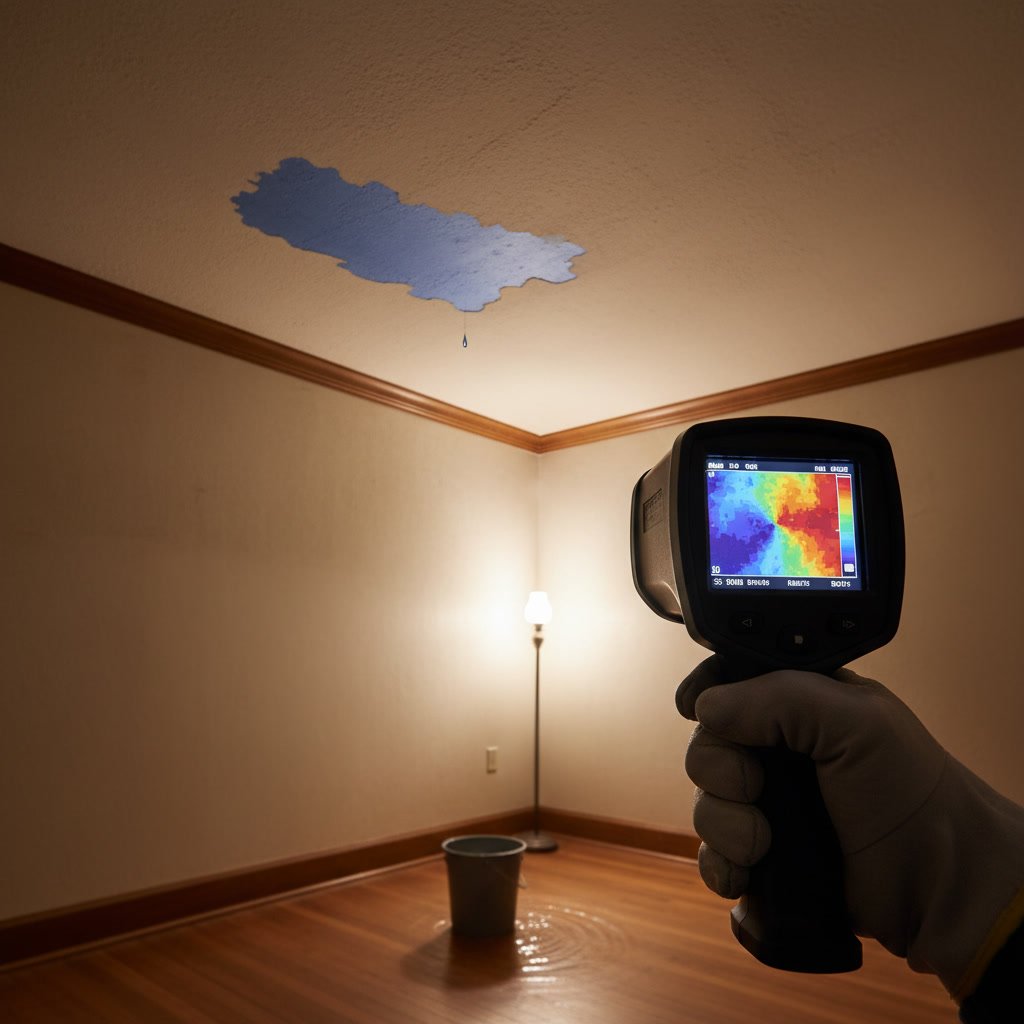
Thermal images provide compelling visual evidence for insurance adjusters reviewing water damage claims. The color-coded temperature maps clearly show the affected area’s boundaries and help justify the scope of restoration work. Insurers appreciate the precision because it reduces guesswork and prevents disputes over whether damage is covered.
Many policies require policyholders to mitigate damage promptly. Thermal scanning demonstrates that you took immediate, professional steps to locate and address the problem. Documentation from the initial scan also establishes a baseline, so follow-up images during drying prove that remediation is progressing effectively.
Working with restoration professionals who understand the insurance claims process ensures that all necessary documentation is captured from day one, streamlining approvals and reimbursement.
Advanced Applications Beyond Standard Leak Detection
Thermal imaging also identifies poor insulation, air leaks, and electrical hot spots that pose fire risks. After fire damage restoration, thermal scans verify that firefighting water has been completely dried from hidden cavities. Following major storms, scans detect roof leaks and wind-driven rain intrusion that might not be visible from inside the attic.
In commercial settings, thermal cameras monitor refrigeration systems, HVAC ductwork integrity, and flat roof membrane failures. The same technology that finds a leaking pipe also identifies condensation problems, drainage issues, and thermal bridging that drives up energy costs.
Protecting Your Property With Proactive Detection
Early leak detection saves thousands of dollars in avoided repairs and preserves property value. A small investment in professional scanning prevents the cascading problems that follow undetected water intrusion: structural rot, mold remediation costs, and the disruption of moving out during major reconstruction.
Thermal imaging delivers certainty. Instead of wondering whether that faint discoloration means trouble, you get definitive answers within hours. You know exactly where water is, where it came from, and what needs to happen next. That clarity reduces stress and speeds up decision-making during what can otherwise be an overwhelming situation.
React Restoration LLC uses advanced thermal imaging equipment and certified technicians to locate hidden leaks throughout the region, protecting properties from preventable water damage. If you suspect a hidden leak or want to verify that your property is dry after a known water event, professional thermal scanning provides the answers you need to make informed decisions and protect your investment.
For immediate leak detection and water damage assessment, contact +16108583469 to schedule a thermal imaging inspection and get expert guidance on protecting your property.